Something extraordinary is happening to the way humanity powers itself. It is not a single invention or a single policy decision. It is a cascade of technological, economic and cultural shifts that together represent the most consequential transition in the history of human energy use. For over a century the global energy system was built on a simple but ultimately unsustainable premise: extract stored energy from the earth in the form of coal, oil and natural gas, combust it to release the energy it contains and accept the carbon dioxide, the air pollution and the finite resource depletion that this process inevitably produces as the necessary costs of modern civilization. That premise is being replaced. Not by wishful thinking or ideological preference but by the measurable, documented and accelerating reality that the clean energy sources harvesting the inexhaustible flows of energy that the sun, the wind, the earth and the movement of water continuously provide have become cheaper, more reliable and more scalable than the fossil fuel systems they are replacing across an increasing range of applications and geographies.
What Makes an Energy Source Truly Clean
The Science of Emissions, Lifecycle Analysis and What Clean Really Means
The term clean energy is used widely and sometimes loosely in ways that make precise definition important for anyone who wants to understand the field accurately rather than aspirationally. A clean energy source is most rigorously defined as one whose operation produces no direct greenhouse gas emissions or air pollutants at the point of generation and whose full lifecycle emissions, from manufacturing through installation through operation through decommissioning, are dramatically lower than the equivalent lifecycle emissions of fossil fuel generation. This lifecycle perspective is important because no energy technology is completely emission-free when the full chain of manufacturing and materials is included. Solar panels require energy-intensive manufacturing processes. Wind turbines require significant quantities of steel, concrete and rare earth materials. But the lifecycle carbon intensity of solar and wind generation, measured in grams of carbon dioxide equivalent per kilowatt-hour of electricity generated over the full life of the installation, is between twenty and fifty times lower than the equivalent figure for natural gas generation and between fifty and one hundred times lower than coal generation.
Solar Energy – Harvesting the Most Abundant Power Source on Earth
How Photovoltaic Technology Converts Sunlight Into Electricity
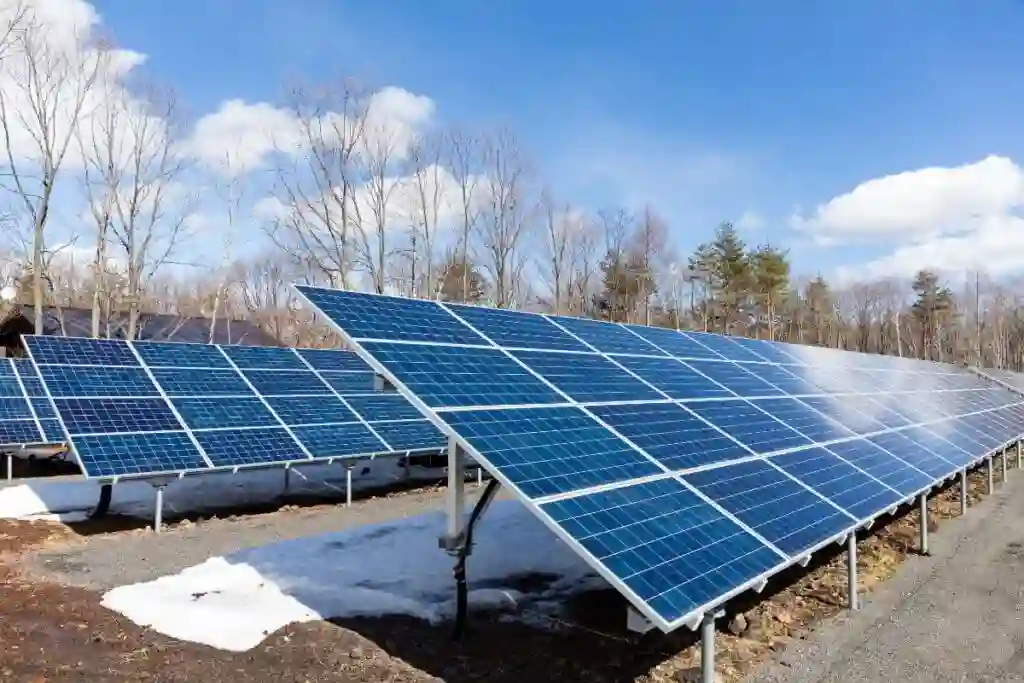
Solar photovoltaic technology is the most rapidly deployed clean energy source in human history and the one whose cost reduction trajectory has most dramatically exceeded the projections of energy analysts, policymakers and even the solar industry itself. The physics underlying photovoltaic electricity generation is the photoelectric effect, which Albert Einstein described in 1905 and for which he received the Nobel Prize in Physics in 1921. When photons from sunlight strike the surface of a semiconductor material, most commonly silicon, they transfer their energy to electrons in the semiconductor’s crystal lattice, exciting those electrons to higher energy states and enabling them to flow as electrical current through an external circuit. The practical implementation of this physics in a solar cell requires the creation of a p-n junction within the semiconductor material, where a layer of silicon doped with phosphorus to create an excess of electrons is bonded to a layer doped with boron to create an excess of electron holes.
Concentrated Solar Power and Its Role in Grid-Scale Generation
Concentrated solar power represents a fundamentally different approach to harvesting solar energy than photovoltaic technology and one whose specific characteristics make it a valuable complement to photovoltaic generation in the clean energy mix rather than a competitor for the same applications. Where photovoltaic systems convert light directly into electricity through the quantum mechanical photoelectric effect, concentrated solar power systems use mirrors or lenses to focus a large area of sunlight onto a small receiver where the concentrated heat is used to generate steam that drives a conventional turbine and generator. The thermal nature of concentrated solar power is simultaneously its most distinctive characteristic and its most practically significant advantage over photovoltaic systems for certain grid applications.
Wind Energy – Turning Movement Into Electricity at Massive Scale
How Wind Turbines Extract Kinetic Energy From Moving Air
Wind energy is the second largest clean energy source by global installed capacity and the one whose deployment has been most transformative in the electricity systems of Northern Europe, parts of the United States and increasingly across Asia and Latin America. The physical principle underlying wind energy generation is the conversion of the kinetic energy of moving air into mechanical rotation and subsequently into electrical energy. A modern wind turbine achieves this conversion through aerodynamic lift rather than through the drag-based mechanism that older windmill designs employed. The blades of a modern horizontal-axis wind turbine are airfoils whose cross-sectional shape creates a pressure differential between the front and rear surfaces of the blade when air flows across them, exactly analogous to the lift generation of an aircraft wing. This pressure differential creates a rotational force on the turbine hub that drives a generator either directly or through a gearbox depending on the turbine’s design architecture.
Hydropower, Geothermal and Ocean Energy – The Less Visible Clean Sources
How Hydropower Has Quietly Powered the World for Over a Century
Hydropower is the original large-scale clean energy source and the one that has provided more clean electricity to more people for longer than any other renewable technology. The operating principle of hydropower is conceptually straightforward: water held at elevation possesses gravitational potential energy that is converted to kinetic energy as it flows downward and to electrical energy as that kinetic energy drives a turbine and generator. The specific efficiency of this conversion is remarkably high. Large hydroelectric turbines achieve conversion efficiencies of 85 to 95 percent of the available hydraulic energy, significantly exceeding the thermodynamic efficiency limits that constrain all thermal generation technologies regardless of their fuel source.
Geothermal Energy and the Heat Beneath Our Feet
Geothermal energy harvests the thermal energy stored within the earth’s crust, which originates from the residual heat of planetary formation and the ongoing radioactive decay of isotopes within the earth’s mantle and core. This heat continuously flows toward the surface, creating temperature gradients that geothermal energy systems exploit by circulating fluids through rock formations where they absorb thermal energy and return it to surface installations where it drives turbines for electricity generation or provides direct heat for buildings and industrial processes.
Green Hydrogen – The Clean Energy Carrier of the Future
How Electrolysis Creates Fuel From Water and Renewable Electricity
Green hydrogen is the clean energy carrier that addresses the specific challenge that the intermittent and geographically concentrated nature of solar and wind energy creates for energy-intensive industrial applications and long-duration energy storage that batteries alone cannot economically address. The production of green hydrogen uses electrolysis, a well-established electrochemical process in which an electric current is passed through water to split it into its constituent hydrogen and oxygen atoms. When the electricity driving this electrolysis process is generated from renewable sources, the resulting hydrogen carries the energy of that renewable electricity in a chemical form that can be stored indefinitely, transported through existing pipeline infrastructure and used in fuel cells, industrial processes or combustion applications without producing carbon dioxide emissions at the point of use. The efficiency of the electrolysis process has improved significantly with the development of proton exchange membrane and alkaline electrolysis technologies that achieve conversion efficiencies of 65 to 80 percent at commercial scale.
How Clean Energy Sources Work Together in a Modern Energy System
The Integration Challenge and the Technologies That Solve It
The transition from a fossil fuel-based energy system to one built on clean energy sources requires solving an integration challenge that the physics of different clean energy technologies creates. Solar generation peaks at midday and is absent overnight. Wind generation is strongest in certain seasons and certain geographies and varies significantly from hour to hour. Hydropower and geothermal provide more consistent output but are geographically constrained. Green hydrogen and long-duration storage can balance seasonal variation. The modern clean energy system that integrates these sources requires three foundational enabling technologies working in concert. Battery storage at grid scale captures surplus renewable generation during periods of high output and delivers it during periods of low output or high demand. Transmission infrastructure connects the geographies of abundant renewable generation with the centers of electricity demand in ways that allow the variability of any single location’s renewable resource to be averaged across the larger geographic area of the grid.
Conclusion
Clean energy sources are not the energy of the future. They are the energy of the present, generating an increasing share of the world’s electricity, driving the most significant reduction in the cost of energy production in the history of the industry and building the infrastructure that the next century of human civilization will depend on. The physics that makes solar panels generate electricity from photons, wind turbines generate electricity from air movement and electrolyzers produce hydrogen from water and renewable electricity are not mysteries. They are well-understood, well-documented and increasingly well-deployed principles of science and engineering that are being applied at the scale the energy transition requires. Understanding them is not just intellectually satisfying. It is the foundation for participating meaningfully in the most important infrastructure conversation of our time.